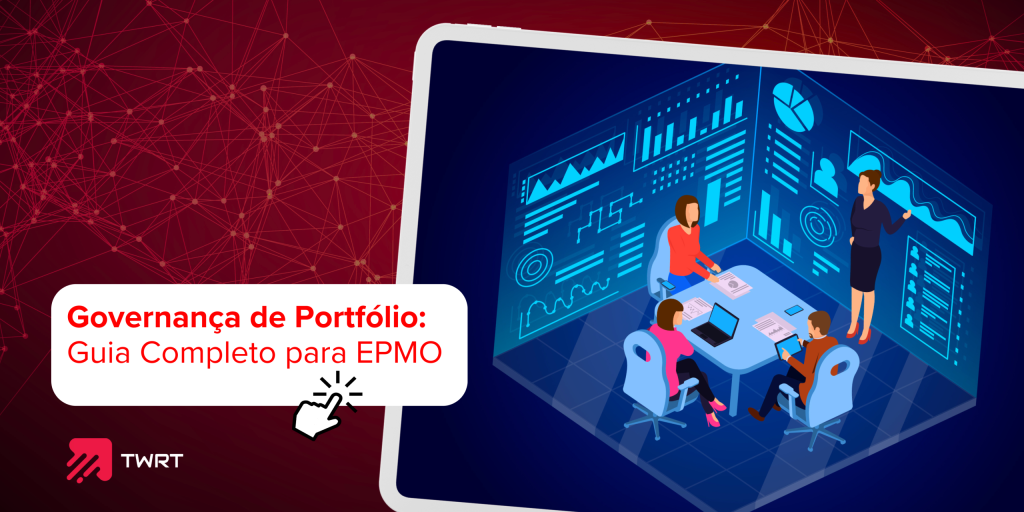
Portfolio Governance: A Comprehensive Guide for EPMOs
Quick Answer (Featured Snippet):
Portfolio governance is the process of centrally and coordinately managing a group of projects and programs to align them with an organization’s strategic objectives. It is crucial for maximizing return on investment and ensuring organizational success.
TL;DR (5 bullet points):
– Portfolio governance aligns projects with corporate strategy.
– It is essential for optimizing resources and prioritizing initiatives.
– It helps ensure compliance with regulations such as the LGPD.
– It improves visibility and control over the project portfolio.
– It promotes a culture of measurable benefits and tangible results.
What Is Portfolio Governance?
Portfolio governance refers to the process of overseeing and managing a set of projects and programs within an organization, with the goal of aligning these activities with the business strategy. The EPMO (Enterprise Project Management Office) plays a crucial role in this context, serving as the hub that centralizes portfolio governance. The EPMO establishes policies, processes, and frameworks that ensure projects are selected, prioritized, and managed in accordance with the company’s strategic objectives, maximizing return on investment.
Why Corporate Governance Matters for Brazilian Companies
Brazilian companies face specific challenges when it comes to portfolio governance. With many projects underway and limited budgets, the need to prioritize initiatives that deliver the greatest value becomes critical. In addition, regulatory pressure—particularly regarding the General Data Protection Law (LGPD)—requires companies to maintain strict control over how data is managed in their projects. Portfolio governance helps mitigate risks, ensure compliance, and optimize the allocation of financial and human resources.
The 5 Pillars of Portfolio Governance
-
Selection and Prioritization: Identifying projects that align with the organizational strategy and offer the highest return on investment. Value and risk analysis tools are frequently used.
-
Strategic Alignment: Ensure that all projects and programs directly support the company’s strategic objectives. This requires ongoing communication between business leaders and the EPMO.
-
Resource Allocation: The efficient allocation of financial, human, and technological resources to maximize the effectiveness and efficiency of projects.
-
Monitoring and Control: Implementation of metrics and KPIs to track project progress, identify deviations, and take corrective action when necessary.
-
Benefits Management: Continuously evaluating the benefits delivered by projects, ensuring that they are contributing to business objectives, and adjusting strategies as needed.
Structure of an Effective EPMO
An effective EPMO is structured with clearly defined roles, responsibilities, and decision-making authority. The EPMO should include corporate governance and portfolio review committees that provide strategic oversight. Roles within the EPMO may include portfolio managers, project analysts, and compliance specialists, each with specific responsibilities to support portfolio governance.
Implementation: 6-Month Roadmap
Phase 1: Assessment
Assessment of the current state of portfolio governance, identification of gaps, and definition of objectives.
Phase 2: Design
Development of governance policies and processes aligned with the business strategy.
Phase 3: Pilot
Implementation of a pilot project to test new processes and tools.
Phase 4: Rollout
Expansion of governance practices across the entire portfolio, with ongoing training and support.
For Those Who Are Technicians
Para líderes técnicos, a governança de portfólio inclui a definição de um modelo de dados robusto e KPIs precisos que permitem o rastreamento eficaz do desempenho do portfólio. Integração com ferramentas como Planview pode facilitar a coleta e análise de dados, oferecendo insights em tempo real e suporte à tomada de decisão.
Compliance and the LGPD
Compliance with the LGPD is a critical component of portfolio governance in Brazil. Companies must ensure that all projects involving personal data comply with the law by implementing strict privacy and security controls.
Checklist: Implementing Portfolio Governance
- Assess the current maturity of the portfolio.
- Set clear strategic goals.
- Develop an effective communication plan.
- Identify key stakeholders.
- Establish a portfolio governance committee.
- Establish KPIs and success metrics.
- Implement portfolio management tools.
- Conduct regular training sessions.
- Continuously monitor and adjust processes.
- Ensure compliance with the LGPD.
If You Only Do 3 Things…
- Align all projects with the organizational strategy.
- Establish clear and ongoing communication between the EPMO and stakeholders.
- Implement a robust monitoring and control system.
FAQs
-
What is an EPMO?
An EPMO is an enterprise-level project management office that standardizes project and portfolio governance. -
Why is portfolio governance important?
It ensures that projects are aligned with business objectives and maximize ROI. -
How are projects prioritized within a portfolio?
Using criteria such as strategic value, cost, risk, and benefit. -
Quais as ferramentas comuns de governança de portfólio?
Planview, Microsoft Project, e SAP PPM. -
How does the LGPD impact portfolio governance?
It requires that all projects handling personal data comply with data protection requirements. -
What is the role of a portfolio manager?
Manage and optimize the project portfolio to ensure strategic alignment.
Reading & References
- PMI: PMBOK Guide
- Gartner: Governance Trend Reports
- Academic articles on corporate governance
Final CTA:
Interested in optimizing your portfolio governance? Contact TWRT for expert consulting and transform your approach to portfolio management.
Related Reading