
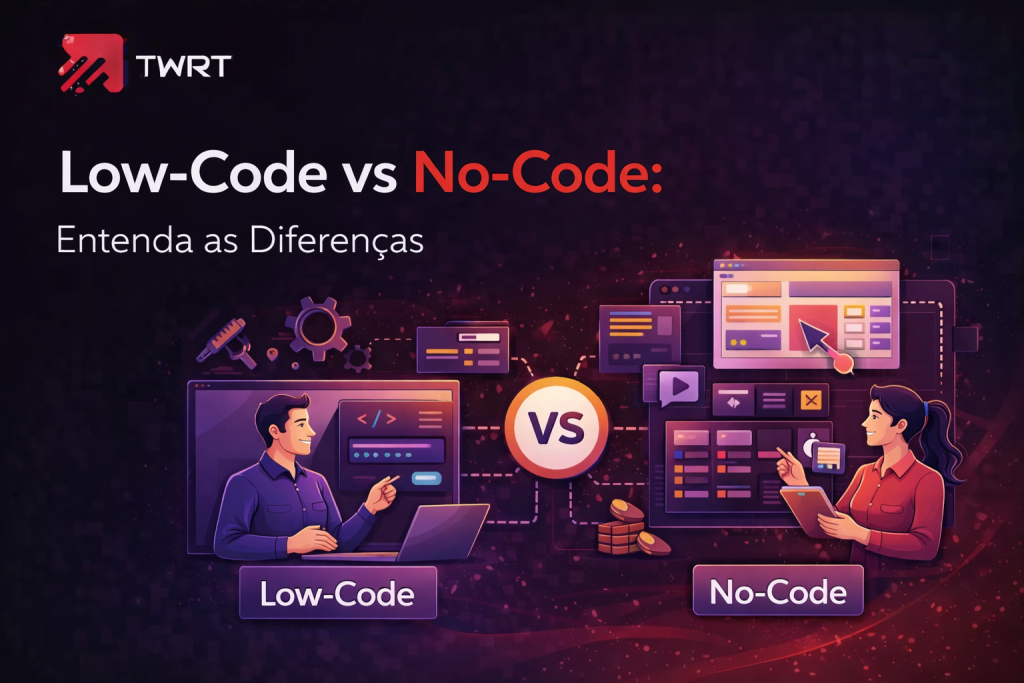
Low-Code vs No-Code: Qual é a Melhor Escolha para sua Empresa?
TL;DR
Low-code e no-code são abordagens para desenvolvimento de software que permitem criar aplicativos com pouca ou nenhuma codificação. Low-code é mais flexível e voltado para desenvolvedores, enquanto no-code é totalmente visual e ideal para usuários de negócios.
📑 Neste Artigo
Resposta Rápida
Escolha low-code se sua equipe tiver desenvolvedores que precisam de flexibilidade para customizações complexas. Opte por no-code se seu objetivo for permitir que usuários de negócio criem soluções rapidamente sem escrever uma linha de código. Ambas as abordagens aceleram o desenvolvimento, mas atendem a diferentes necessidades organizacionais.
Tabela Comparativa
| Critério | Low-Code | No-Code |
|---|---|---|
| Preço | Geralmente mais alto | Geralmente mais acessível |
| Facilidade | Requer algum conhecimento técnico | Extremamente fácil e intuitivo |
| Recursos | Extensos, permite customizações | Limitado a funcionalidades visuais |
| Integrações | Amplo suporte a APIs e sistemas | Integrações pré-definidas |
| Suporte | Comunidade ativa e suporte técnico | Forte suporte ao usuário final |
| Melhor Para | Desenvolvedores e equipes de TI | Usuários de negócios e equipes não técnicas |
O que é Low-Code?
Low-code é uma abordagem de desenvolvimento de software que minimiza a necessidade de codificação manual, permitindo que desenvolvedores criem aplicativos rapidamente através de interfaces gráficas e modelagem visual. Este método é ideal para empresas que precisam de soluções personalizadas e rápidas, pois permite que os desenvolvedores usem código apenas quando necessário para funcionalidades mais complexas. Plataformas de low-code como Mendix, que a TWRT representa oficialmente, oferecem uma gama de ferramentas que facilitam a integração com sistemas existentes e permitem a automação de processos de negócio, além de serem escaláveis para projetos de grande porte. No Brasil, o uso de plataformas low-code tem crescido significativamente, especialmente em setores que demandam inovação rápida como finanças e tecnologia.
Vantagens do Low-Code
- Rapidez no Desenvolvimento: Reduz significativamente o tempo necessário para criar e lançar aplicativos no mercado. Estudos indicam que o low-code pode acelerar o desenvolvimento em até 90%.
- Flexibilidade: Permite customizações detalhadas que podem adaptar o aplicativo às necessidades específicas da empresa. Isso é crucial em setores onde a personalização é uma vantagem competitiva.
- Integração com Sistemas Legados: Facilita a integração com sistemas existentes, garantindo que novos aplicativos funcionem bem com a infraestrutura atual. Isso ajuda a maximizar o valor dos investimentos tecnológicos existentes.
- Escalabilidade: Ideal para projetos que precisam crescer e se adaptar com o tempo, suportando uma ampla gama de funcionalidades e usuários. Empresas que planejam expansão devem considerar plataformas low-code para suportar esse crescimento.
Exemplos Práticos de Low-Code
Um exemplo notável de low-code é uma empresa de seguros que precisa rapidamente adaptar suas ofertas a uma nova regulamentação. Usando uma plataforma low-code, ela pode ajustar seus sistemas internos para cumprir as novas normas em semanas, ao invés de meses. Outro exemplo é uma instituição financeira que deseja lançar um aplicativo móvel para clientes; com low-code, o tempo de desenvolvimento pode ser reduzido drasticamente, permitindo que o produto chegue ao mercado mais rapidamente.
Além disso, considere uma empresa de logística que precisa otimizar rotas de entrega. Usando low-code, ela pode construir um sistema que analisa dados em tempo real para ajustar as rotas conforme necessário, economizando tempo e reduzindo custos. Empresas de manufatura também podem se beneficiar do low-code, desenvolvendo soluções para gerenciar a cadeia de suprimentos com eficiência.
O que é No-Code?
No-code é uma metodologia que permite a criação de aplicativos através de plataformas totalmente visuais, sem a necessidade de escrever qualquer linha de código. Voltada para usuários de negócios, essa abordagem democratiza o desenvolvimento de software, permitindo que pessoas sem formação técnica criem soluções eficientes e rapidamente. Ferramentas no-code são ideais para pequenas e médias empresas que desejam digitalizar processos e criar soluções personalizadas sem depender de equipes de TI. No Brasil, o no-code está ganhando popularidade em startups e setores como marketing e vendas, onde a rapidez e a flexibilidade são cruciais para atender às demandas de mercado. Plataformas como a Planview, também representada pela TWRT, oferecem soluções no-code robustas para gestão de projetos e processos.
Vantagens do No-Code
- Acessibilidade: Permite que qualquer pessoa na organização participe do desenvolvimento de software, independentemente de sua experiência técnica. Isso promove uma cultura de inovação em toda a organização.
- Rapidez e Eficiência: Facilita a criação rápida de aplicativos, promovendo a inovação dentro das equipes de negócios. Pesquisas mostram que soluções no-code podem ser implementadas até 10 vezes mais rápido do que as tradicionais.
- Custo-efetividade: Geralmente mais barato de implementar, especialmente para soluções menos complexas. Isso é crucial para startups e pequenas empresas com orçamentos limitados.
- Iteração Rápida: Facilita a rápida prototipagem e ajuste de soluções conforme o feedback dos usuários, permitindo que as empresas ajustem suas soluções em tempo real para melhor atender às necessidades dos clientes.
Exemplos Práticos de No-Code
Considere uma pequena agência de marketing que precisa automatizar o gerenciamento de leads. Usando uma plataforma no-code, a equipe pode configurar um sistema de CRM personalizado em poucos dias, sem a necessidade de contratar desenvolvedores externos. Outro exemplo é uma startup que deseja criar um protótipo de aplicativo como prova de conceito para investidores; com no-code, a startup pode rapidamente criar e iterar seu produto conforme necessário.
Adicionalmente, uma ONG pode usar no-code para desenvolver uma plataforma de doações online, permitindo que qualquer membro da equipe adicione novas funcionalidades ou altere a interface conforme necessário, sem precisar de um desenvolvedor dedicado. Instituições educacionais também estão adotando no-code para criar portais de e-learning personalizados para professores e alunos.
Comparativo Detalhado
Facilidade de Uso
No-code é indiscutivelmente mais fácil de usar para pessoas sem conhecimento técnico, oferecendo interfaces intuitivas que permitem arrastar e soltar elementos. Low-code, por outro lado, requer algum nível de conhecimento técnico, mas ainda é mais simples do que o desenvolvimento tradicional, pois oferece ferramentas visuais que facilitam a criação e modificação de aplicativos.
Preços e Licenciamento
Plataformas no-code tendem a ser mais acessíveis, com modelos de preço que favorecem pequenas empresas e startups. Low-code, devido à sua flexibilidade e capacidade de personalização, geralmente possui um custo mais elevado, mas justifica o investimento para empresas que necessitam de soluções mais complexas. De acordo com a Forrester, empresas que adotam low-code podem ver um retorno sobre o investimento (ROI) de até 253% em três anos.
Recursos Técnicos
Low-code oferece recursos técnicos mais avançados, permitindo a criação de soluções altamente personalizadas e integradas. No-code é limitado a funcionalidades predefinidas, mas é suficiente para a maioria das aplicações de negócios que não exigem complexidade técnica.
Integrações Disponíveis
Low-code geralmente suporta uma ampla gama de integrações com APIs e sistemas legados, tornando-o ideal para empresas que precisam conectar novos aplicativos a infraestrutura existente. No-code oferece integrações predefinidas, o que pode ser suficiente para pequenas empresas ou projetos específicos.
Suporte e Comunidade
Ambas as abordagens possuem comunidades ativas e suporte técnico, mas o low-code tende a ter uma base de suporte mais robusta devido à sua utilização por desenvolvedores. No-code, por ser voltado para usuários de negócios, foca mais no suporte ao usuário final.
Curva de Aprendizado
A curva de aprendizado para no-code é quase inexistente, enquanto que low-code requer um aprendizado inicial, embora ainda seja muito menos do que o desenvolvimento tradicional. A escolha depende do nível de habilidade técnica da equipe.
Casos de Uso Ideais
Low-code é ideal para empresas que precisam de soluções personalizáveis e complexas, enquanto no-code é perfeito para pequenas e médias empresas que desejam agilidade na criação de soluções básicas e eficientes.
Veredito: Quando Escolher Cada Um
Escolha Low-Code se…
- Sua equipe inclui desenvolvedores que podem aproveitar a flexibilidade para criar soluções complexas.
- Você precisa integrar novos aplicativos com sistemas legados.
- As suas necessidades de negócio exigem personalização extensa.
Escolha No-Code se…
- Você busca empoderar usuários de negócio para criar soluções sem depender da TI.
- Seu foco é a rapidez na implementação de soluções simples e eficazes.
- Está lidando com um orçamento mais restrito.
Perguntas Frequentes
- Low-code é melhor que no-code?
-
Depende das necessidades da sua empresa. Low-code é melhor para customizações, enquanto no-code é ideal para rapidez e simplicidade.
-
Posso integrar aplicações no-code com sistemas existentes?
-
Sim, mas as opções podem ser limitadas a integrações predefinidas.
-
Qual é a curva de aprendizado para low-code?
-
Consideravelmente menor que o desenvolvimento tradicional, mas requer algum conhecimento técnico.
-
No-code é seguro para aplicações empresariais?
-
Sim, mas é crucial escolher plataformas que ofereçam robustas medidas de segurança. Além disso, garantir que as melhores práticas de segurança sejam seguidas na implementação é essencial.
-
Como escolher entre low-code e no-code?
-
Avalie suas necessidades de personalização, orçamento e a composição de sua equipe para tomar a melhor decisão.
-
Quais são as limitações do no-code?
-
Embora seja fácil de usar, o no-code pode ser limitado em termos de funcionalidades avançadas e personalizações complexas.
-
Low-code pode ser usado para prototipagem rápida?
-
Sim, é excelente para criar protótipos funcionais que podem ser iterados rapidamente.
-
É possível migrar de no-code para low-code?
-
Em alguns casos, é possível, mas pode envolver a reestruturação de parte da solução para aproveitar a flexibilidade extra do low-code.
-
Quais setores mais se beneficiam do no-code?
-
Setores como marketing, vendas, e pequenas startups que precisam de soluções rápidas e de fácil implementação.
-
Como o suporte técnico difere entre low-code e no-code?
- Low-code oferece suporte mais técnico, enquanto no-code foca em suporte ao usuário final, facilitando a resolução de problemas para não desenvolvedores.
-
Quais são os desafios de adotar no-code em larga escala?
- Gerenciamento de mudanças e padronização podem ser desafiadores, especialmente em grandes organizações.
-
Como as plataformas de low-code e no-code mantêm a segurança dos dados?
- A maioria das plataformas oferece criptografia de dados e conformidade com regulamentações como GDPR e LGPD.
Tendências Futuras
Com o avanço das tecnologias de automação e inteligência artificial, espera-se que tanto low-code quanto no-code se tornem ainda mais integrados em plataformas empresariais. A tendência é que essas ferramentas ofereçam capacidades analíticas avançadas, permitindo que empresas criem soluções mais inteligentes e adaptativas. Além disso, o crescimento do trabalho remoto e a necessidade de soluções ágeis e escaláveis continuarão a impulsionar a adoção dessas abordagens, especialmente em ambientes que exigem rápida adaptação às mudanças do mercado.
As plataformas de no-code estão evoluindo para incluir inteligência artificial, permitindo que usuários criem aplicativos que podem aprender e se adaptar ao comportamento do usuário. Já as plataformas de low-code estão incorporando funcionalidades de realidade aumentada (AR) e realidade virtual (VR) para desenvolver experiências de usuário mais imersivas.
Espera-se também que as plataformas no-code e low-code comecem a oferecer suporte nativo para computação em nuvem, proporcionando maior flexibilidade e escalabilidade. Além disso, com a crescente importância da análise de dados, essas plataformas devem integrar mais ferramentas analíticas para ajudar as empresas a extrair insights valiosos de seus dados.
Conclusão
Low-code e no-code são poderosas abordagens que podem transformar a forma como as empresas desenvolvem software. A escolha entre as duas depende de suas necessidades específicas, habilidades da equipe e orçamento. A TWRT, como consultora oficial Mendix e Planview, está pronta para ajudar sua empresa a escolher e implementar a solução mais adequada, garantindo que você aproveite ao máximo essas tecnologias inovadoras. Entre em contato conosco para uma consultoria personalizada e descubra como podemos ajudar sua empresa a crescer.
Ao entender as nuances e capacidades dessas plataformas, as empresas podem tomar decisões mais informadas e estratégicas, otimizando seus processos de TI e acelerando a inovação. A escolha entre low-code e no-code pode ser crítica para o sucesso em um ambiente de negócios cada vez mais digital.
Artigos Relacionados
nn


