

Checklist: Garantindo qualidade antes da entrega
Em um mundo onde a concorrência é acirrada e as expectativas dos clientes estão em constante evolução, a qualidade dos produtos e serviços se tornou um diferencial crucial para o sucesso de qualquer negócio. Um checklist de qualidade eficaz não apenas assegura que cada entrega atenda aos padrões mais elevados, mas também constrói a confiança do cliente e fortalece a reputação da marca. Neste artigo, vamos explorar a importância de um checklist de qualidade, como ele pode ser implementado em diferentes setores e quais elementos essenciais devem ser incluídos para garantir que nada seja esquecido antes da entrega final. Prepare-se para transformar sua abordagem de qualidade e elevar os padrões do seu negócio!
Checklist : Uma ferramenta, assegurando que todos os requisitos
Contextualização
Em um cenário de concorrência acirrada, as empresas não podem apenas atender, mas também superar as expectativas dos clientes. A padronização e a consistência garantem que cada produto atenda aos padrões de qualidade estabelecidos — algo essencial para a excelência no mercado. Nesse contexto, o checklist torna-se uma ferramenta crucial, assegurando que todos os requisitos de qualidade sejam verificados e cumpridos antes da entrega ao consumidor.
Desenvolvimento
O desenvolvimento do projeto foi realizado de forma simples e prática, com o objetivo de tornar a ferramenta o mais didática e completa possível para o usuário. Suas funcionalidades são bastante intuitivas.
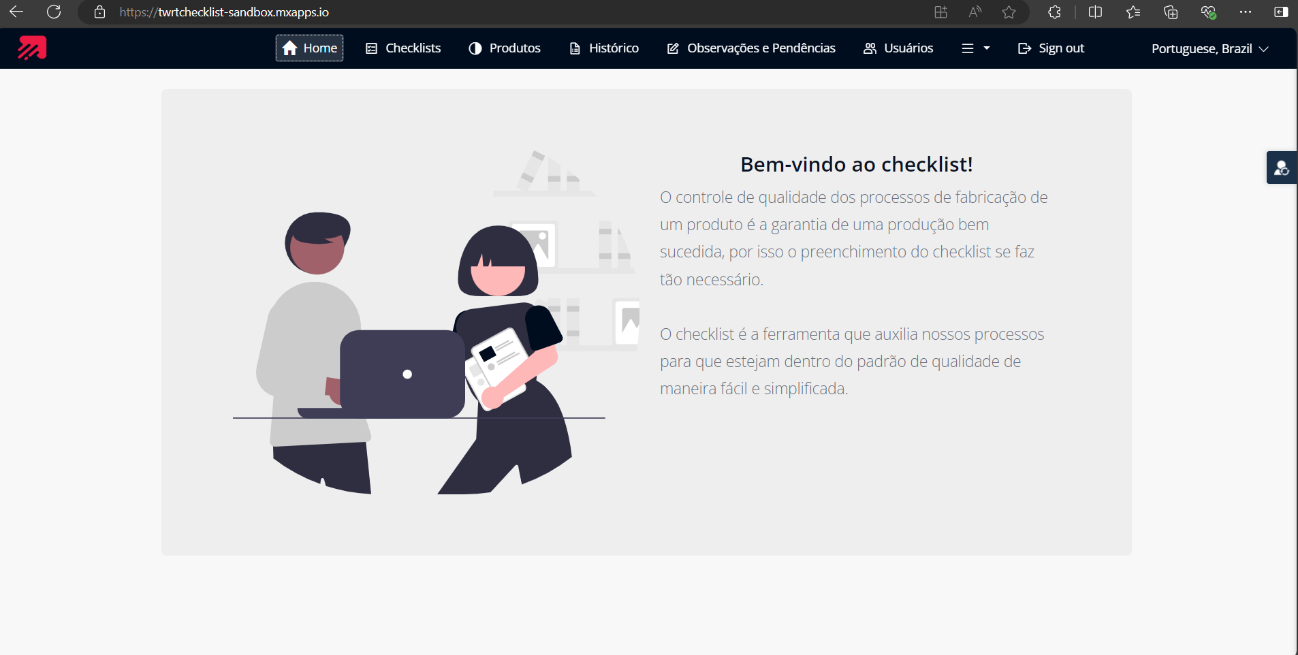
Na Figura 1, é apresentada a página principal, onde é possível visualizar e acessar todas as funcionalidades da ferramenta de forma prática. O usuário pode navegar entre as opções disponíveis no menu superior — “Home”, “Checklists”, “Produtos”, “Histórico”, “Observações e Pendências” e “Usuários” — selecionando apenas a função desejada.
Figura 1- Página inicial
Na Figura 2, Segue-se a criação do checklist, em que se pode criar, editar, duplicar e ativar listas. Também é possível realizar uma busca pelo nome da lista desejada.
Figura 2 – Lista dos Checklists
Na Figura 3, é apresentada a seção de produtos, onde se faz o cadastro dos itens que serão adicionados ao checklist. Esses produtos podem ser cadastrados manualmente ou mediante importação. Para isso, utiliza-se o botão “Buscar Planilha”, que exige somente a seleção do arquivo com os produtos já cadastrados em seu computador.
Figura 3 – Lista de produtos
Além disso, é possível visualizar o histórico dos checklists criados e verificar seus status atuais, conforme vemos na Figura 4.
Figura 4 – Histórico
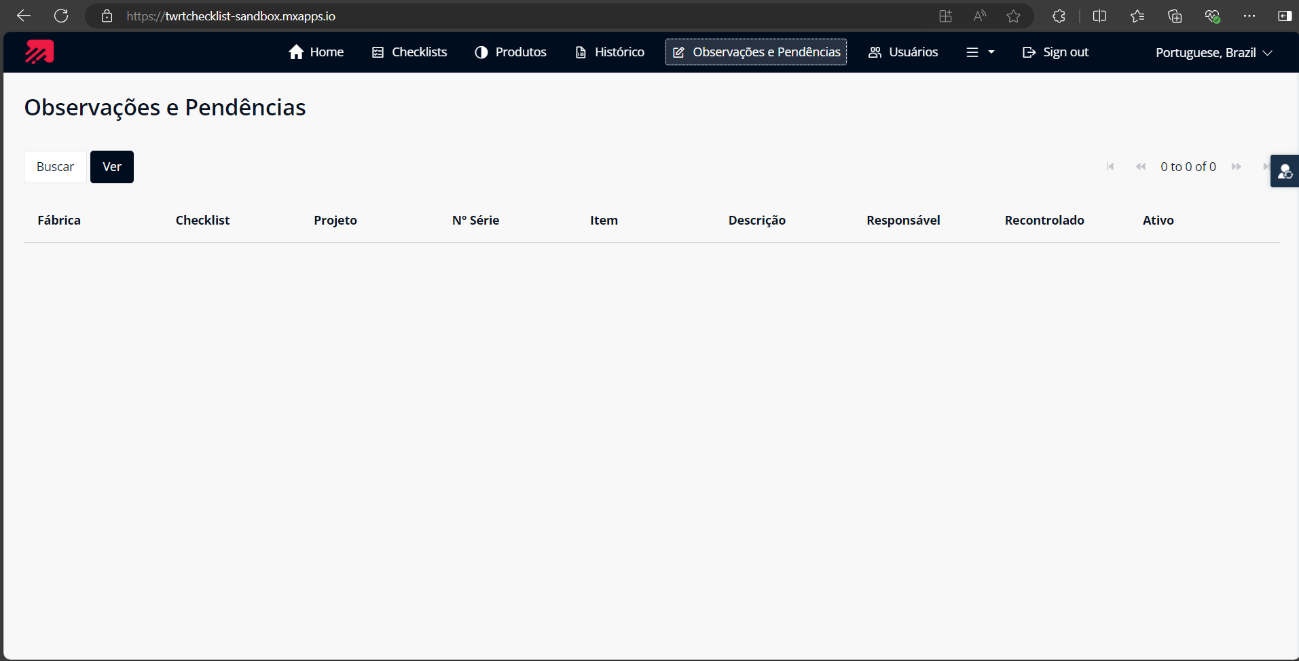
Assim como o histórico, pode-se visualizar as observações e pendências relativas ao checklist — seja alguma nota feita em determinada lista, seja um produto ainda pendente — como mostra a Figura 5.
Figura 5 – Observações e Pendências
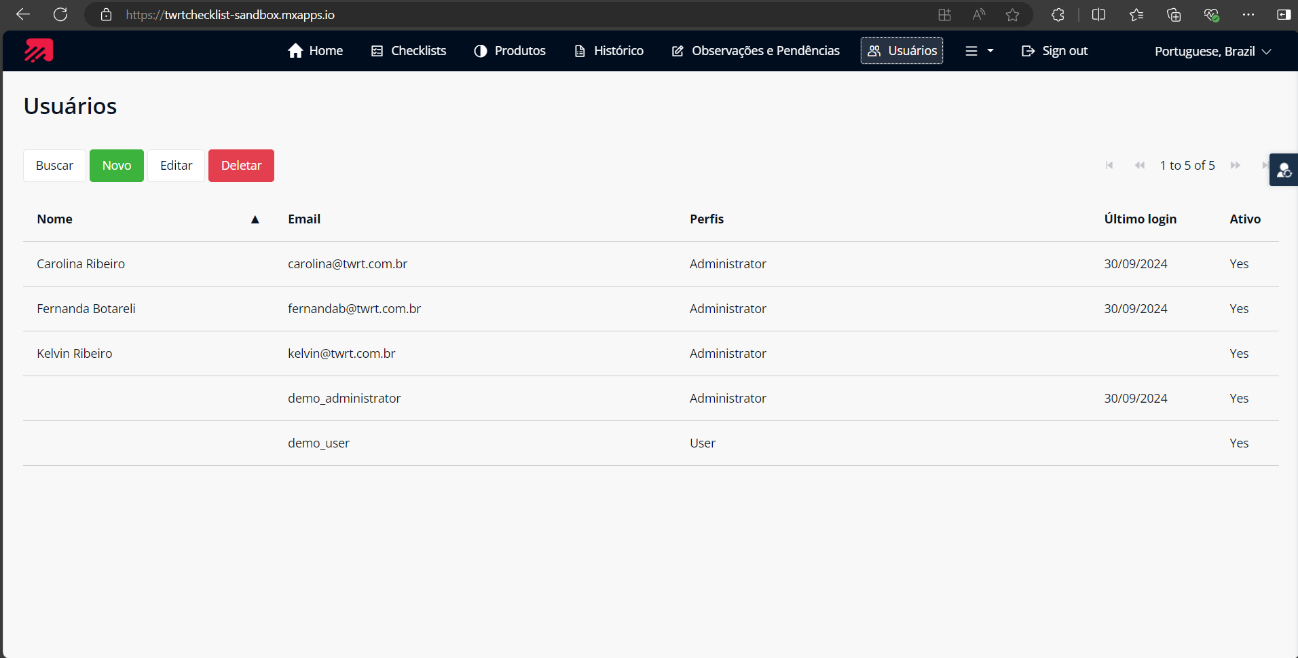
Por fim, há a seção de usuários, ilustrada na Figura 6, na qual aparecem todos os perfis cadastrados e o histórico de últimos acessos.
Figura 6 – Usuários
Conclusão
Em um ambiente empresarial cada vez mais exigente, o checklist de produtos destaca-se como uma ferramenta vital para a garantia da qualidade. Ao proporcionar um método sistemático e simplificado de verificação de itens, o checklist não apenas minimiza erros e omissões, mas também promove uma cultura de responsabilidade e atenção aos detalhes nas equipes.
Sua implementação permite que as empresas se adaptem rapidamente à s mudanças do mercado e à s exigências regulatórias, além de fortalecer a confiança do consumidor ao garantir que os produtos atendam a padrões elevados. Ao adotar o checklist como parte integrante dos processos de controle de qualidade, as organizações não apenas asseguram a excelência de seus produtos, mas também se posicionam de forma competitiva, construindo uma reputação sólida e sustentável.
Em última análise, a utilização dessa ferramenta é um investimento estratégico que pode conduzir ao sucesso a longo prazo e à satisfação do cliente.
Continue explorando
Como Funciona
O checklist de qualidade é uma ferramenta essencial para garantir que todos os aspectos de um projeto sejam revisados antes da entrega final. Aqui está como ele funciona:
- Definição de Critérios: Primeiramente, é importante estabelecer quais critérios de qualidade são relevantes para o seu projeto. Isso pode incluir requisitos técnicos, padrões de design e expectativas do cliente.
- Criação do Checklist: Com os critérios definidos, você pode criar um checklist detalhado que liste todos os itens a serem verificados. Isso ajuda a garantir que nada seja esquecido.
- Revisão e Inspeção: A equipe deve revisar cada item do checklist. Isso envolve inspecionar o trabalho realizado e verificar se atende aos critérios estabelecidos.
- Correção de Problemas: Se algum item não atender aos padrões, é necessário fazer as correções antes da entrega final. O checklist ajuda a identificar rapidamente esses pontos.
- Entrega Final: Após a revisão e correções, o projeto pode ser entregue com confiança, sabendo que passou por um rigoroso processo de qualidade.
Benefícios
1. Aumento da Eficiência
O uso de um checklist de qualidade permite que as equipes identifiquem rapidamente as etapas que precisam ser concluídas, reduzindo o tempo gasto em revisões. Por exemplo, ao seguir uma lista de verificação, um desenvolvedor pode garantir que todos os testes necessários foram realizados antes da entrega, evitando retrabalho e atrasos.
2. Melhoria na Comunicação
Um checklist fornece uma linguagem comum para todos os membros da equipe, facilitando a comunicação. Isso é especialmente útil em projetos colaborativos, onde diferentes departamentos precisam estar alinhados. Por exemplo, um checklist pode incluir itens que precisam ser revisados pelo time de marketing, garantindo que todos estejam na mesma página.
3. Aumento da Satisfação do Cliente
Ao garantir que todos os padrões de qualidade sejam atendidos antes da entrega, a probabilidade de erros diminui, resultando em um produto final mais satisfatório. Clientes que recebem produtos de alta qualidade tendem a retornar e recomendar a empresa a outros, aumentando a base de clientes.
4. Redução de Custos
Um checklist eficaz pode ajudar a evitar erros dispendiosos que surgem após a entrega. Por exemplo, se um produto é enviado com falhas, os custos de correção e retrabalho podem ser significativos. Um checklist ajuda a minimizar esses riscos, economizando dinheiro a longo prazo.
5. Padronização de Processos
Implementar um checklist de qualidade promove a padronização das práticas de trabalho dentro da equipe. Isso garante que todos sigam os mesmos procedimentos, resultando em consistência e previsibilidade nos resultados, o que é crucial em ambientes de produção.
Casos de Uso
Um checklist de qualidade pode ser uma ferramenta poderosa em diversas situações do dia a dia. Aqui estão alguns exemplos práticos:
- Inspeção de Produtos em uma Fábrica: Antes de enviar produtos para os clientes, uma fábrica pode utilizar um checklist para verificar a qualidade de cada item, garantindo que atenda aos padrões estabelecidos.
- Revisão de Conteúdo em um Site: Uma equipe de marketing pode aplicar um checklist de qualidade para revisar postagens de blog, assegurando que o conteúdo esteja livre de erros gramaticais e que siga a identidade visual da marca.
- Preparação de Eventos: Na organização de um evento, um checklist pode ser usado para garantir que todos os detalhes, como som, iluminação e catering, estejam prontos e funcionando antes do início.
- Desenvolvimento de Software: Equipes de TI podem implementar checklists para testes de software, assegurando que todas as funcionalidades sejam verificadas antes do lançamento, minimizando bugs e problemas de usabilidade.


